
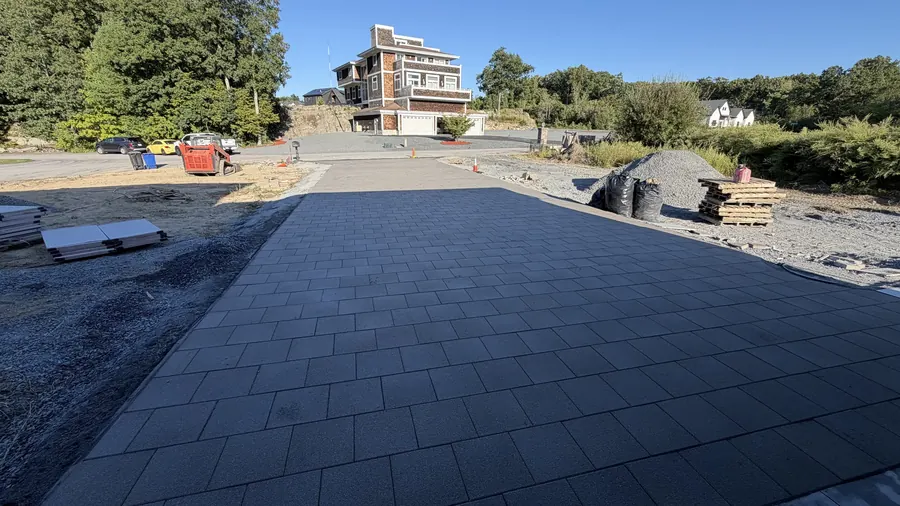
Driveway Pavers
Paver Driveway Installation in Rockland, MA and the South Shore
Interlocking paver driveways built on a deep, compacted base for the weight of your vehicles, with drainage that protects the base through every winter.
- Licensed and Insured
- Google Guaranteed
- Up to 10-Year Warranty
- 10+ Years of Experience
- Free In-Home Consultation
Driveway pavers
Paver Driveways Built for Vehicle Loads
Backyard Experts builds paver driveways for homeowners across the South Shore, Plymouth County, and Greater Boston. A driveway is the most demanding hardscape on a property, because it carries the weight of cars and trucks every day. That takes a deeper base, careful compaction, solid edges, and drainage that keeps water out of the base.
A driveway that cracks, sinks, or grows ruts is almost always a base problem. The surface only shows what is happening underneath it.
Every driveway we build is designed to:
- Carry daily vehicle loads without rutting
- Flex through freeze and thaw instead of cracking
- Drain away from the garage and the house
- Stay tight at the edges where tires turn
- Give the home a finished, high-end entrance
If your driveway is cracked, sinking, or holding water, start with a free site evaluation. We do not provide landscaping, tree work, lawn care, mowing, or garden maintenance.
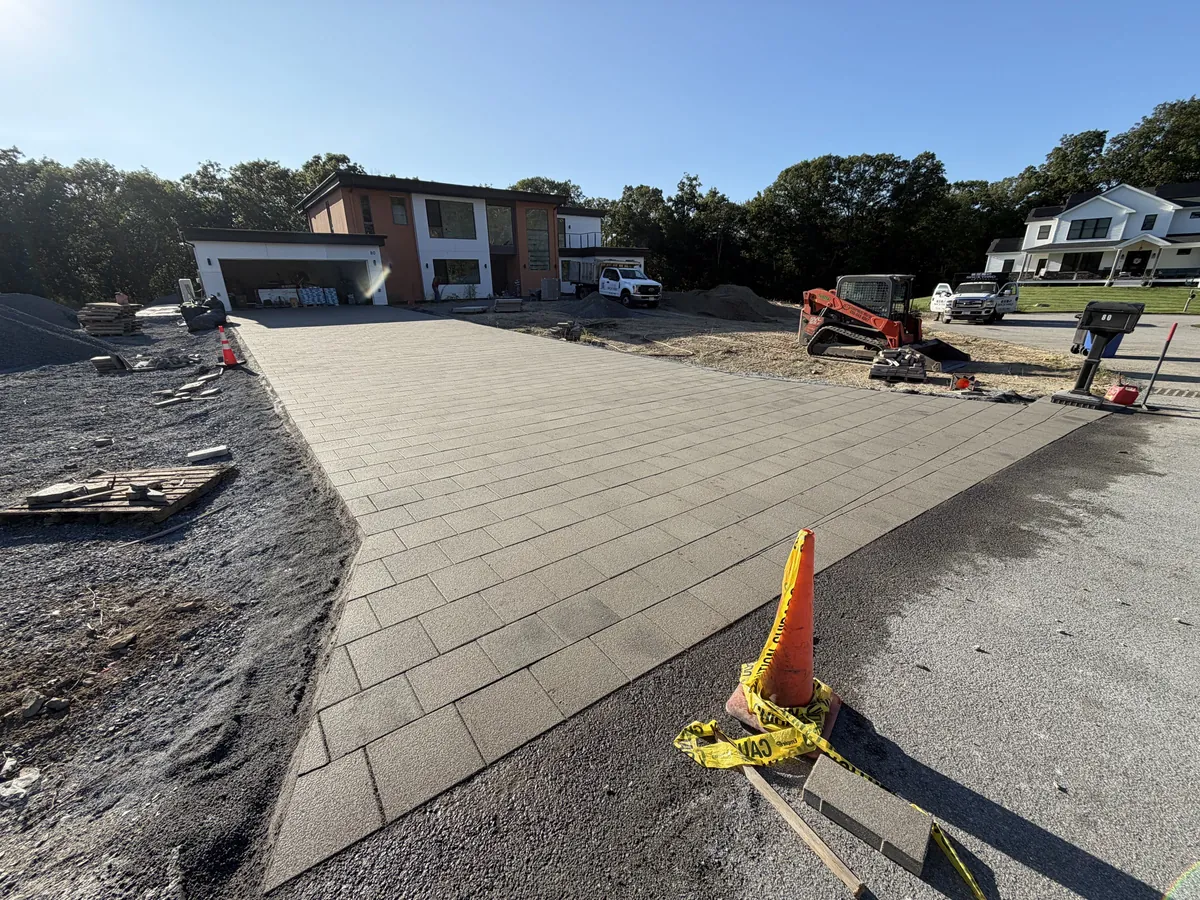
When you need one
Is a Paver Driveway Really Necessary?
A paver driveway becomes the right choice when the current surface keeps failing under load, water, or frost. Unlike a patio or a walkway, a driveway takes repeated pressure from tires, plows, and turning wheels, so a surface that was only patched will keep breaking in the same places, year after year.
Common conditions that call for pavers:
- Asphalt or concrete with spreading cracks
- Sunken areas and ruts where the cars park
- Water that pools on the driveway or runs to the garage
- Edges that crumble into the lawn
- A worn driveway that drags down curb appeal
When pavers may not be necessary:
- A newer driveway with sound base and minor surface wear
- A long rural drive where gravel is the practical choice
- A short-term budget fix before a larger project
Cause, effect, and the structural solution:
- A thin base compresses under cars, solved with a deep compacted base
- Water softens the subgrade, solved with grading and drainage
- Rigid slabs crack in winter, solved with flexible interlocking pavers
- Edges spread and crumble, solved with a solid edge restraint
Our process
What’s Included in Our Driveway Installation
A paver driveway is built in layers, and each one has to be right for the weight of a vehicle. Removing the old surface, digging out soft soil, and compacting the base in lifts take most of the work. The pavers go in near the end, on a foundation built to carry them for decades.
- 01
Removal and Excavation
We remove the old asphalt or concrete and dig out soft soil to the depth the load requires.
- 02
Deep Compacted Base
Crushed stone installed in layers and compacted with heavy equipment.
- 03
Grading and Drainage
Pitch away from the garage and the house, with drainage where water collects.
- 04
Vehicle-Rated Pavers
Pavers made for driveway loads, set in patterns that resist turning tires.
- 05
Edge Restraint and Borders
Solid edges and borders that keep the field from spreading.
- 06
Joint Sand and Compaction
Polymeric sand swept in and the surface compacted to lock the pavers.
Driveway work we do:
Base systems
Driveway Base Systems and When Each One Is Used
Driveways need more base than any other paver project, and the right depth depends on the soil, the water, and the vehicles that use it. The table below shows the driveway systems we build most often on the South Shore and when each one makes sense for a residential property.
| Driveway System | When It Is Used |
|---|---|
| Standard Driveway Base | Stable soil and everyday passenger cars |
| Reinforced Base | Frequent traffic, trucks, or heavier vehicles |
| Deep Structural Base | Soft or wet soil that needs more depth to carry loads |
| Permeable Paver Driveway | Sites that need rain to soak in instead of running off |
Using a patio base under a driveway is the fastest way to get ruts and sunken areas.
Pricing factors
What Affects the Cost of a Paver Driveway
Driveway pricing depends on the structure the site needs, not only the size. Removing an old slab, digging out soft soil, and building a deeper base all change the scope. Two driveways of the same area can cost very different amounts, so we price each one after a site visit, with a written estimate.
Driveway costs depend on:
- Size and shape of the driveway
- Removal of the old surface
- Soil condition and base depth
Also considered:
- Paver style, pattern, and borders
- Drainage the site needs
- Access and grade at the street
The free in-home consultation gives you a real number for your driveway, not a guess per square foot.
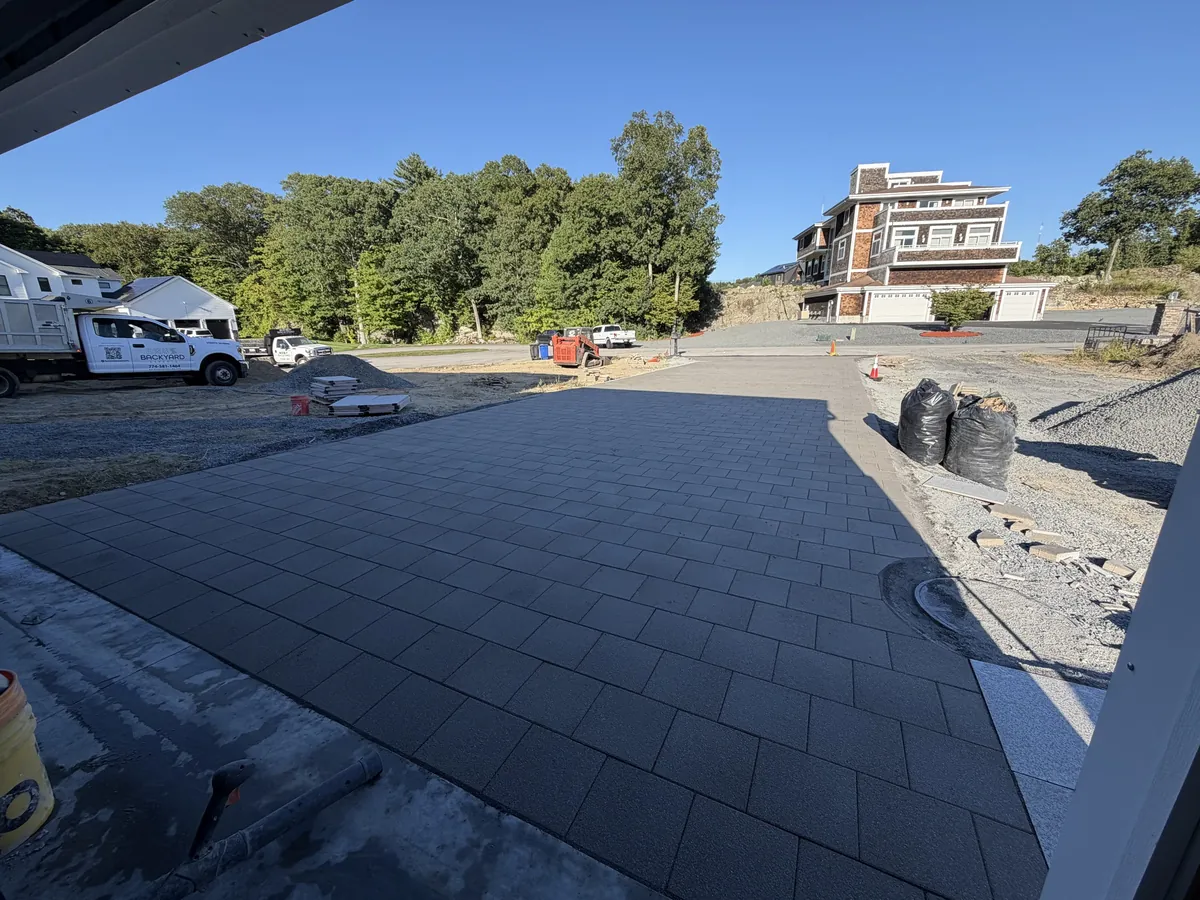
Compare
Paver Driveways vs Asphalt and Concrete
Most homeowners compare pavers with asphalt and poured concrete. Each surface has a place, and the right one depends on budget, soil, and how long you plan to stay. The table below shows where each driveway surface works best, so you can compare them on performance and not only on price.
| Surface | When It Works |
|---|---|
| Asphalt | A lower first cost when regular sealing and repairs are acceptable |
| Poured Concrete | Stable soil with little frost movement |
| Paver Driveway | Long-term durability, drainage, and repairs without visible patches |
| Walkways | A matching path from the driveway to the front door |
| Hardscape Contractor | Driveway, walkway, and steps planned as one project |
Built to standard
Industry Standards for Driveway Installation
Driveways carry vehicle loads, so the method matters more than on any other paver project. We follow the Interlocking Concrete Pavement Institute guidelines for base depth, compaction, paver thickness, laying pattern, and edge restraint. That is what keeps a paver driveway flat and tight under daily traffic and New England plowing.
Backyard Experts operates with:
- Licensed and insured operations
- Our own trained crew on every project
- Excavation and base depth sized to the load
- Drainage planned before the first block is set
- Installation following ICPI and NCMA guidelines
- Permits handled when the town requires them
- Clean, protected job sites
These standards ensure:
- Walls that stay plumb and stable
- Water that drains instead of pushing
- Protection of your foundation and driveway
- Long-term value for the property
Why us
Why Choose Backyard Experts
Backyard Experts is a hardscaping and masonry company based in Rockland, MA, not a lawn care company that also builds walls. Our goal is not simply stacking block. It is building a structure that handles your soil, your slope, and New England winters, and still looks right ten years from now.
- Licensed and Insured
- Google Guaranteed
- Up to 10-Year Warranty
- 10+ Years of Experience
- Free In-Home Consultation
- Our Own Crew, Led by Owner Ronnie
- Hardscaping and Masonry Only
- Written Estimates Before Work Begins
- Clean Job Sites and Restored Lawn Edges
- Based in Rockland, MA
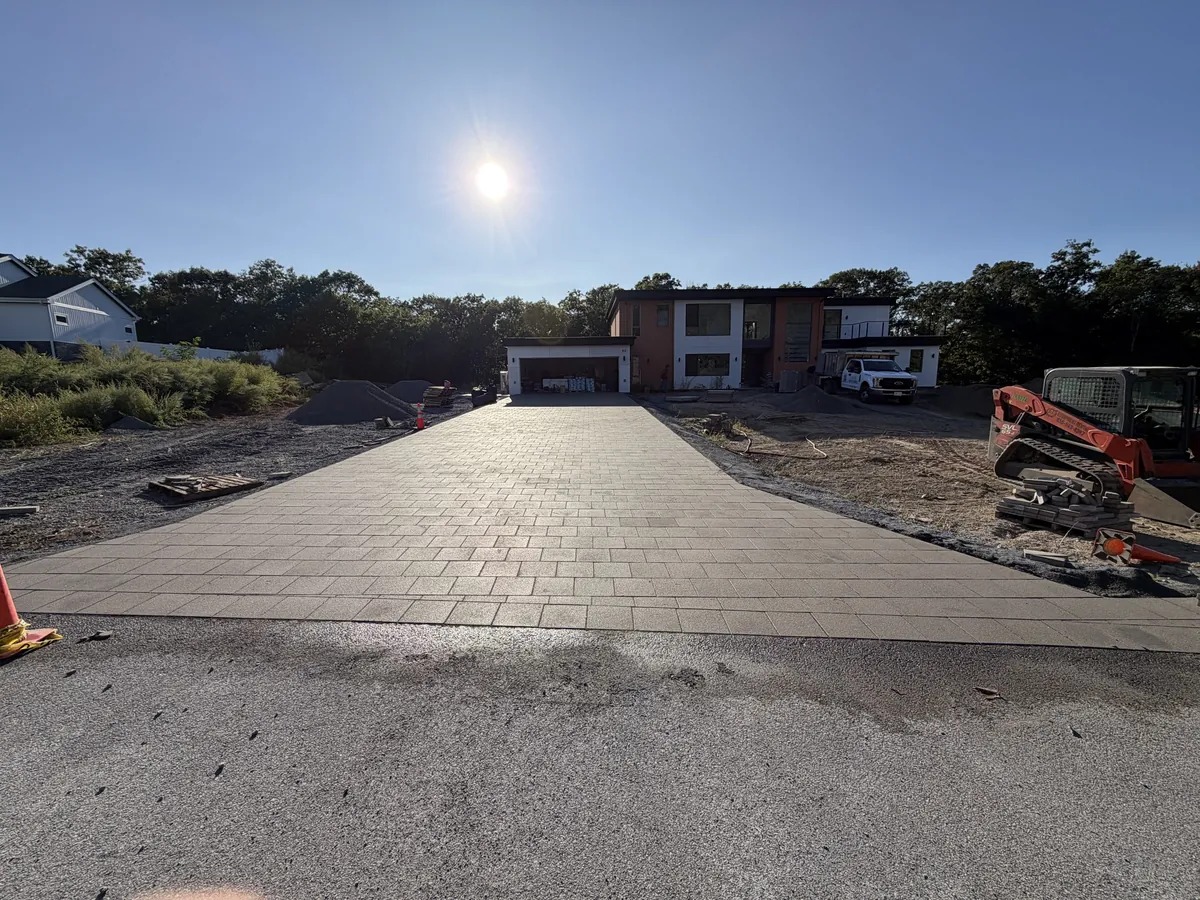
Where we work
Service Areas
Backyard Experts is based in Rockland, MA and builds driveway pavers for homeowners throughout the South Shore, Cape Cod, and Greater Boston. Our crew works in the Massachusetts communities below, from Plymouth County to Cape Cod and Greater Boston, and if your town is nearby but not listed, call us to confirm availability before you schedule.
- Rockland, MA
- Abington, MA
- Bridgewater, MA
- Brockton, MA
- Carver, MA
- Duxbury, MA
- East Bridgewater, MA
- Halifax, MA
- Hanover, MA
- Hanson, MA
- Hingham, MA
- Hull, MA
- Kingston, MA
- Lakeville, MA
- Marion, MA
- Marshfield, MA
- Mattapoisett, MA
- Middleborough, MA
- Norwell, MA
- Pembroke, MA
- Plymouth, MA
- Plympton, MA
- Rochester, MA
- Scituate, MA
- Wareham, MA
- West Bridgewater, MA
- Whitman, MA
- Braintree, MA
- Brookline, MA
- Canton, MA
- Cohasset, MA
- Dedham, MA
- Dover, MA
- Foxborough, MA
- Franklin, MA
- Holbrook, MA
- Medfield, MA
- Medway, MA
- Milton, MA
- Needham, MA
- Norfolk, MA
- Norwood, MA
- Plainville, MA
- Quincy, MA
- Randolph, MA
- Sharon, MA
- Stoughton, MA
- Wellesley, MA
- Westwood, MA
- Weymouth, MA
- Wrentham, MA
- Barnstable, MA
- Bourne, MA
- Dennis, MA
- Falmouth, MA
- Harwich, MA
- Mashpee, MA
- Sandwich, MA
- Yarmouth, MA
- Natick, MA
- Newton, MA
- Attleboro, MA
- Easton, MA
- Fall River, MA
- Mansfield, MA
- New Bedford, MA
- Raynham, MA
- Rehoboth, MA
- Somerset, MA
- Swansea, MA
- Boston, MA
And surrounding Massachusetts communities.
Free estimate
Fix the Driveway Once, the Right Way
Cracks, ruts, and puddles on a driveway only grow with each winter and each plow season. Patching the surface treats the symptom. A paver driveway on a deep, compacted base with proper drainage fixes the cause, and it gives your home an entrance that still looks right years from now.
Call (774) 341-4894 or request your free in-home consultation online, and we will plan the right driveway for your property.
- Licensed and Insured
- Google Guaranteed
- Up to 10-Year Warranty
- 10+ Years of Experience
- Free In-Home Consultation
- Based in Rockland, MA
FAQ
Frequently Asked Questions About Driveway Pavers
These answers cover the questions homeowners ask most often about driveway pavers: vehicle loads, cracking, drainage, permits, repairs, and cost. If your question is not listed, call Backyard Experts at (774) 341-4894 and we will explain the options for your property in plain language.
What are driveway pavers?
Driveway pavers are interlocking concrete or stone units rated for vehicle traffic, laid over a deep compacted gravel base and locked in by edge restraint and joint sand. Together they spread the weight of each tire across the base, so the surface carries cars and trucks without cracking or forming ruts.
How are driveway pavers different from patio pavers?
Driveway pavers are usually thicker and laid in patterns that resist the twisting of turning tires, and the base underneath is much deeper. A patio carries people and furniture. A driveway carries tons of weight every day, so it needs a stronger structure from the soil up to the surface.
Can a paver driveway handle heavy vehicles?
Yes, when the base is built for them. We size the base depth and the paver thickness to the vehicles that use the driveway. Trucks, larger SUVs, and frequent traffic call for a reinforced or deeper base, which we plan during the site visit instead of using one standard for every job.
Do paver driveways crack?
Individual pavers rarely crack, because the joints let the surface flex when the ground moves in winter. If one paver is ever damaged, it can be lifted out and replaced without a visible patch. That is the main difference from asphalt and concrete, where one crack usually leads to more.
Is drainage important for a driveway?
Very important. Water that soaks into the base softens it, and a soft base under vehicle weight leads to sinking and ruts. We pitch the driveway away from the garage and the house and add drainage where water collects, so the base stays firm through rain, snowmelt, and frost.
How long does a paver driveway last?
A paver driveway built on a properly sized and compacted base can last for decades with little maintenance. Most driveway failures we see come from a base that was too thin for the load. Our work is backed by a warranty of up to 10 years.
Do I need a permit for a new driveway?
It depends on your town. Changes at the street, a wider curb cut, or work near wetlands or drainage areas can require approval. We tell you what applies to your property during the consultation, so the project is planned around any requirements before work begins.
How long does driveway installation take?
Project length depends on the size of the driveway, removal of the old surface, excavation depth, borders or aprons, material delivery, and the weather. We give you a clear schedule before work begins, including when the driveway will be ready for your cars again.
How much does a paver driveway cost?
The cost depends on the size of the driveway, removal of the old surface, the soil and base depth, the paver style and borders, drainage, and access at the street. We price every driveway after a free site visit, so the estimate reflects your property instead of a generic rate per square foot.
Do you also do landscaping or lawn care?
No. Backyard Experts specializes in hardscaping and masonry: driveways, patios, retaining walls, walkways, pool decks, and steps. We do not provide lawn care, mowing, landscaping, or garden maintenance. After building a driveway we restore the soil along the edges, but planting and yard care are not part of our service.