
Beginner guide
What Is Hardscaping? A Complete Beginner Guide
Hardscaping is the structural, non-living part of a yard: patios, walls, walkways, driveways, and steps. This guide explains what it includes, which materials are used, and how a project is built.
- Licensed and Insured
- Google Guaranteed
- Up to 10-Year Warranty
- 10+ Years of Experience
- Free In-Home Consultation
- Based in Rockland, MA
Definition
Defining Hardscaping: The Bones of Your Yard
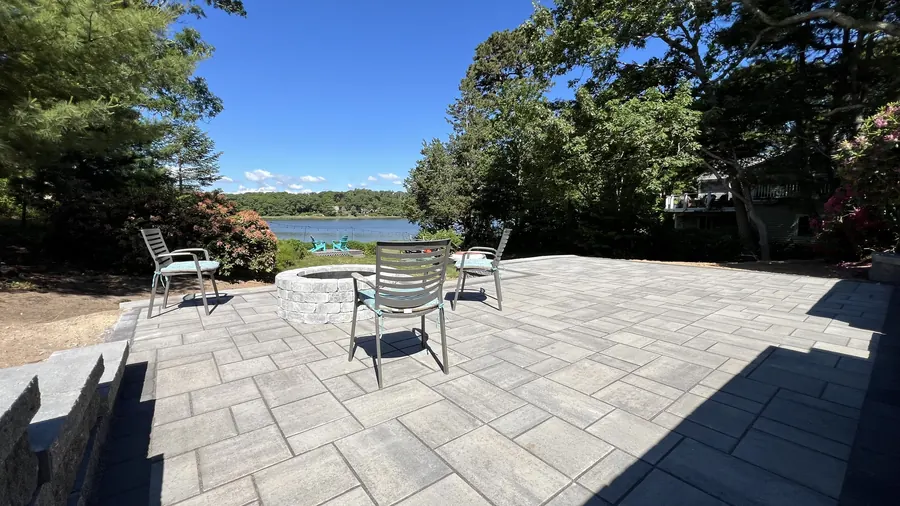
What is hardscaping? A great backyard combines two parts: softscaping and hardscaping. Softscaping is the living part, such as grass, shrubs, and flowers. Hardscaping is the structural, non-living part: pavers, natural stone, and concrete placed on purpose to create level, usable, and lasting outdoor space.
Think of hardscaping as the bones of the property. Just as a house needs a frame, a yard needs structure to handle foot traffic, define spaces, and control how soil and water move.
Components
The Main Components of a Hardscape
Hardscaping covers several kinds of projects, and each one has a job. Some create surfaces to walk, sit, or park on. Others hold back soil and manage grade changes. Most well-designed yards combine both kinds, planned together so the levels, drainage, and materials work as one system.
Paving and surfaces:
- Paver patios as a level outdoor floor
- Paver driveways with more curb appeal
- Walkways that keep feet dry and protect the lawn
Structural features:
- Retaining walls for slopes and erosion
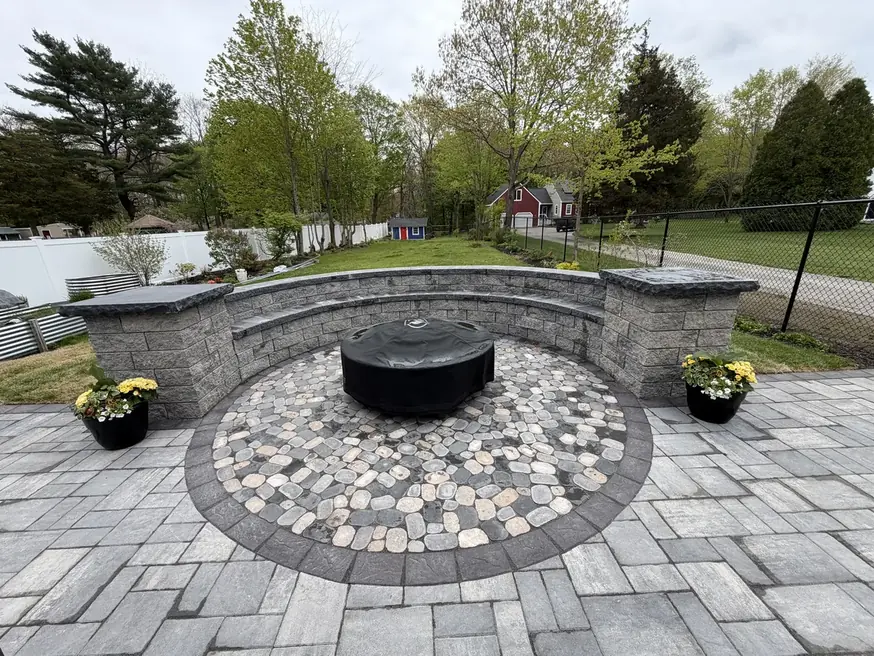
- Seat walls and garden walls that define spaces
- Steps that connect different levels
Benefits
Why Homeowners Invest in Hardscaping
Homeowners invest in hardscaping because it makes the yard usable and adds lasting value. A patio or an outdoor living area works like an extra room. Proper grading and drainage built into a patio or a wall can also fix standing water that has been a problem in the yard for years.
| Benefit | Long-Term Impact |
|---|---|
| Durability | Weather-resistant materials and fewer repairs |
| Function | More usable outdoor space, most of the year |
| Less Upkeep | Less lawn to water and mow |
| Drainage | Water moved away from the house |
Materials
Choosing the Right Hardscaping Materials
The materials give a hardscape its character. Natural stone, such as granite, fieldstone, and bluestone, offers a timeless look, and every piece is unique. Concrete pavers come in many colors and shapes, and they are made for high strength, so they handle Northeast freeze and thaw cycles well.
Lighter, textured pavers stay cooler under bare feet, which makes them a good fit around pools. The best choice depends on the style of the home and how the space will be used.
The process
How a Hardscaping Project Is Built
A successful installation is not only about laying stones on the ground. It is a careful process that starts long before the first paver is set. Each step below protects the next one, and skipping any of them is how patios sink, walls lean, and joints wash out.
- Site analysis: soil, drainage patterns, and underground utilities
- Excavation and base: organic soil removed and replaced with gravel
- Compaction: a solid foundation that will not sink or shift
- Edge restraint: borders that lock the whole system in place
- Finishing: joint sand that protects against weeds and weather
Maintenance
Maintenance and Longevity of Hardscapes
Hardscaping needs far less care than a garden, but it is not zero maintenance. Sweep and rinse the surfaces, keep an eye on the joints, and refill joint sand where it has washed out, because water getting under the pavers is the main cause of shifting during winter.
Many homeowners also choose to clean and reseal pavers every few years to protect against staining and keep the color fresh.
Free estimate
Plan Your Hardscape With a Local Expert
A project like this needs a team that knows local soil, drainage, and town rules. Backyard Experts builds hardscapes across the South Shore, and we will walk your yard and put a plan and a price in writing. You can also call (774) 341-4894 to talk with our team.
- Licensed and Insured
- Google Guaranteed
- Up to 10-Year Warranty
- 10+ Years of Experience
- Free In-Home Consultation
- Based in Rockland, MA
FAQ
Questions About Hardscaping for Beginners
These answers cover the questions homeowners ask most often about hardscaping basics: what it includes, materials, and upkeep. If your question is not listed, call Backyard Experts at (774) 341-4894 and we will explain the options for your property in plain language.
What is the difference between hardscaping and landscaping?
Landscaping, or softscaping, deals with living things: lawns, shrubs, trees, and flowers. Hardscaping builds the non-living structures: patios, walls, walkways, driveways, and steps. Most beautiful yards combine both, but they are different trades, and Backyard Experts focuses only on hardscaping and masonry.
What are the most common hardscaping projects?
The most common hardscaping projects are paver patios, retaining walls, walkways, paver driveways, pool decks, and stone steps. Many homeowners combine several of them, such as a retaining wall with a patio on top and steps leading down, so the yard works as one connected outdoor space.
How long does hardscaping last?
Hardscaping built on a properly excavated and compacted base, with good drainage, can last for decades. Most failures come from a thin base, missing edge restraint, or water trapped under the surface, not from the pavers or stone themselves. Backyard Experts backs its work with a warranty of up to 10 years.