
Hiring guide
How to Choose the Best Hardscaping Contractor for Your Home
When you hire a hardscaping contractor, you are not only buying stone and gravel. You are investing in structure and long-term property value. This guide shows what to check before you sign.
- Licensed and Insured
- Google Guaranteed
- Up to 10-Year Warranty
- 10+ Years of Experience
- Free In-Home Consultation
- Based in Rockland, MA
The role
What a Professional Hardscape Contractor Does
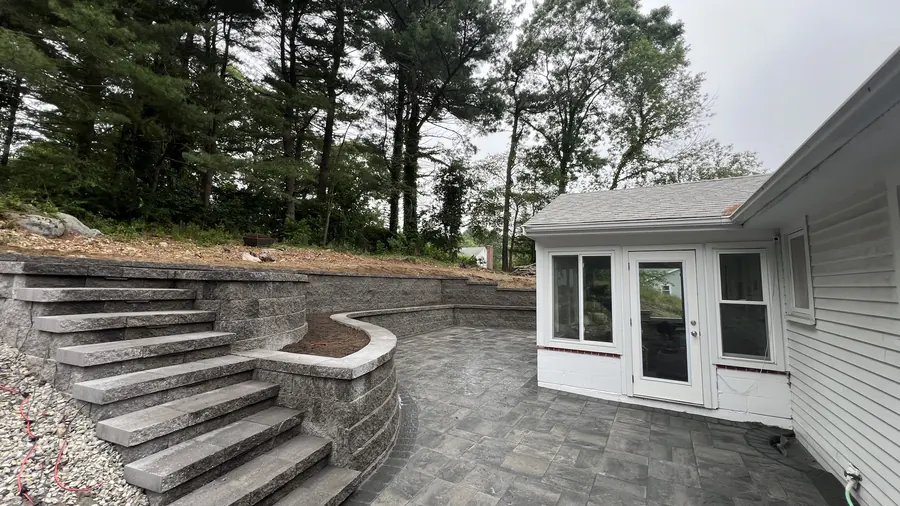
A qualified hardscaping contractor turns a design into a durable, working structure. The best contractor is the one who cares about what happens beneath the surface: subgrade preparation, soil compaction, and the base material that decide whether a patio stays level for decades or shifts after the first freeze.
A real specialist does not just hand you a number. They give you a plan that covers soil pressure behind walls, water running across the surface, and the drainage that manages both.
Expertise
Evaluating Technical Expertise
Not every contractor is equipped for interlocking paver work. Many general landscapers lack the training and equipment. Look for a team that follows industry guidelines, such as those from the Interlocking Concrete Pavement Institute and the National Concrete Masonry Association, for base thickness and joint stabilization.
Ask about polymeric sand and edge restraints. A contractor who skimps on those details may deliver a project that looks great on day one and fails a few years later. A good contractor explains the trade-offs between materials in plain language.
How to compare
A Simple Framework for Comparing Contractors
Beautiful portfolios are easy to show, but the business side is where many projects succeed or fail. Start by confirming general liability insurance and workers compensation coverage. Then use the points below to compare contractors on the things that actually decide how the project goes and how it holds up.
| What to Check | Why It Matters |
|---|---|
| Portfolio range | Walls, patios, and driveways show real experience |
| Local references | Older projects show how the work holds up |
| Insurance | Protects you if something happens on site |
| Permits | The contractor handles town filings when needed |
| Drainage plan | A written plan prevents erosion and wet basements |
| Warranty | A written warranty covers settling and movement |
Drainage
Why Drainage and Site Preparation Matter Most
The most common reason pavers fail is not the stone. It is water. A good hardscaping contractor studies the yard first, finds where water pools, and moves it away from the foundation with grading, drains, or a permeable base. On retaining walls, drainage is a safety issue, not an option.
Without clean stone backfill and a drain behind a wall, water pressure builds until the wall bulges or fails. Taller walls may also need geogrid reinforcement. Ask how the base will be built: crushed stone compacted in thin layers, not dumped all at once.
Materials
Comparing Materials: Looks and Performance
Your choice of material affects both maintenance and lifespan. Interlocking pavers flex slightly with the ground instead of cracking, which suits New England winters. Concrete pavers offer many colors and textures and high strength for driveways. Natural stone gives a one-of-a-kind look but needs a skilled mason to set evenly.
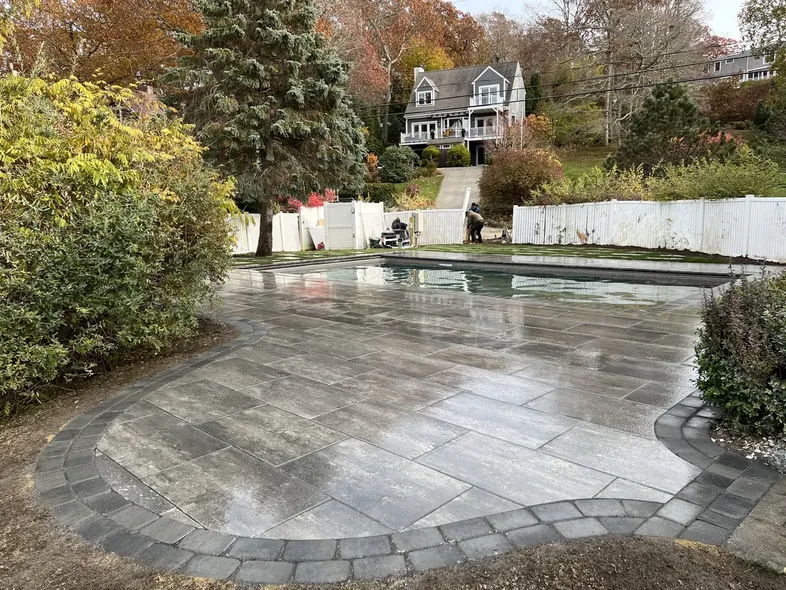
Porcelain pavers resist stains and moss, which makes them popular for pool decks. A good contractor helps you match the material to the home and the use.
Value
How Hardscaping Adds Value to Your Home
Hardscaping is one of the home improvements that adds lasting value. A well-built paver driveway or an outdoor living area increases usable space and curb appeal, and buyers see it as an extra room. To get the most value, the project should match the architecture and style of your home.
There is also the everyday value: a fire pit where the family gathers, or a walkway that keeps mud out of the house.
Before you sign
Final Checks: Contracts and Warranties
Before you sign, read the contract carefully. A professional agreement leaves no room for hidden costs. It lists the materials by product and color, the base material, the joint sand, the payment schedule, and the cleanup, including restoring lawn areas disturbed by equipment during the project.
- A detailed scope of work with the materials named
- An estimated start and completion window
- A payment schedule tied to progress, not everything upfront
- Cleanup and lawn restoration written in
- A written workmanship warranty
The warranty is the contractor’s promise to come back if a paver sinks or a wall leans. Backyard Experts offers warranties of up to 10 years.
Free estimate
Talk to a Hardscaping Contractor Near You
Backyard Experts builds walls, patios, driveways, walkways, and steps across the South Shore, and we know how local soil, grade, and town rules change the way a project should be built. You can also call (774) 341-4894 to talk with our team.
- Licensed and Insured
- Google Guaranteed
- Up to 10-Year Warranty
- 10+ Years of Experience
- Free In-Home Consultation
- Based in Rockland, MA
FAQ
Questions About Hiring a Hardscaping Contractor
These answers cover the questions homeowners ask most often about hiring a hardscaping contractor: what to ask, insurance, and warranties. If your question is not listed, call Backyard Experts at (774) 341-4894 and we will explain the options for your property in plain language.
What questions should I ask a hardscaping contractor?
Ask how deep the base will be and how it is compacted, how drainage will be handled, which edge restraint and joint sand they use, whether they carry liability insurance and workers compensation, who handles permits, and what the written warranty covers. Clear, specific answers are a good sign.
Is a landscaper the same as a hardscaping contractor?
No. A landscaper focuses on plants, lawns, and garden care. A hardscaping contractor builds structures such as walls, patios, steps, and paths, with the excavation, base, and drainage they need. Many landscapers do some paver work, but a specialist brings the training and equipment structural work requires.
Should I choose the lowest estimate?
Not without comparing what each estimate includes. A lower price often means a thinner base, no drainage, or no edge restraint, and those shortcuts show up as sinking and shifting a few winters later. Compare the scope line by line, and choose the contractor whose plan addresses your soil and water.